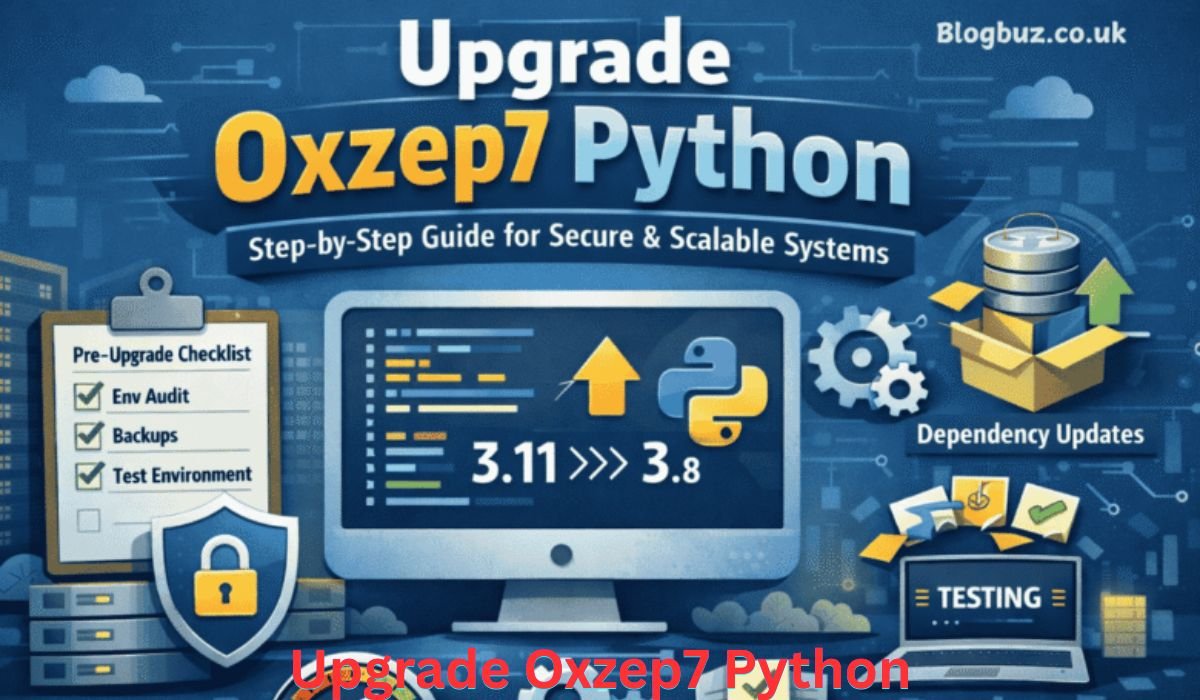
Upgrading your Python version can feel overwhelming, especially when the release brings significant changes to how your entire codebase behaves. But with the right mindset and a clear plan, the upgrade process becomes manageable and even exciting for any developer ready to grow.
The good news is that Oxzep7 Python rewards those who take the leap. From better execution speed to cleaner modern syntax, this version is built for developers who want their applications to run faster, safer, and smarter. Let’s walk through everything you need to know.
Why Upgrading to Oxzep7 Python Matters

Staying on outdated versions creates real risks from broken compatibility issues to missing out on critical security patches. Upgrading to Oxzep7 Python is a smart investment in your long-term development workflow and overall code stability.
Every delay in upgrading creates technical debt that piles up silently. Teams that prioritize keeping their Python programming language version current enjoy smoother software development cycles, fewer bugs, and better support from the wider community support network.
Key reasons to upgrade now:
- Access to the latest security patches and vulnerability fixes
- Better runtime optimization for faster apps
- Improved modern syntax that simplifies complex logic
- Stronger compatibility with modern libraries
- Active community support and ongoing documentation updates
| Reason to Upgrade | Impact Level | Urgency |
| Security Patches | Critical | Immediate |
| Performance Optimization | High | Short-term |
| Modern Syntax Access | Medium | Flexible |
| Library Compatibility | High | Short-term |
| Community Support | Medium | Ongoing |
Real Improvements in Oxzep7 Python

Oxzep7 Python brings tangible improvements that developers notice immediately. From async performance gains to smarter memory handling, the upgrades are designed around real-world web development, data analysis, and automation use cases.
The standard library has been expanded, making common tasks like data manipulation and networking far less tedious. Developers switching from older versions often describe the difference as going from a slow country road to a smooth highway, same destination, completely different ride.
What’s genuinely better in Oxzep7:
- Faster async performance for concurrent applications
- Refined memory handling reduces resource waste
- Broader toolchain support for modern developer tools
- New Python modules for simplified networking tasks
- Cleaner syntax improvements inspired by community feedback
| Feature | Before Oxzep7 | After Oxzep7 |
| Async Performance | Moderate | Significantly Improved |
| Memory Handling | Basic | Optimized |
| Standard Library | Limited | Expanded |
| Syntax Clarity | Verbose | Clean & Modern |
| Security Coverage | Partial | Comprehensive |
Back Up Before You Begin
Before touching anything, back up your work. This isn’t optional, it’s the foundation of a safe migration process. Use a version control system like Git to snapshot your entire project state before beginning the Python version upgrade.
Export your requirements.txt and any lock file your project relies on. If you use containers, take a snapshot. A proper backup means you can always roll back without losing a single line of your hard work.
Backup checklist before upgrading:
- Commit all changes to Git and push to remote
- Export your full requirements.txt file
- Save a copy of any active lock file
- Snapshot containers or virtual machine images
- Document your current Python environment version
Check Compatibility Across Your Codebase
Running a thorough dependency check before upgrading saves hours of debugging later. Scan your codebase for outdated packages, deprecated functions, and any code patterns that won’t survive the transition to Oxzep7 Python.
Compatibility testing doesn’t have to be scary. Start with your most critical modules and work outward. Look at each dependency and confirm it supports your new Python version. Reach out to library maintainers when you find gaps most are responsive and appreciate the feedback.
Steps for compatibility checking:
- Run a full dependency check using pip tools
- Identify all deprecated functions in your code
- Review official documentation for breaking changes
- Test smaller isolated modules before full application testing
- Flag packages without active library maintainers
Use Virtual Environments for a Clean Upgrade
Virtual environments are your best friend during any Python version upgrade. They give you environment isolation so you can test Oxzep7 Python without touching your live production setup. Think of it as a safe sandbox for experimentation.
Using venv or tools like pyenv, you can spin up a fresh Python environment in minutes. Install your packages with pip, run your tests, and only migrate once everything checks out. This approach protects your stable codebase while you explore the new version freely.
Virtual environment best practices:
- Always use venv to create isolated environments
- Use pyenv on macOS and Linux for version switching
- Keep Windows environments managed through version managers
- Never install packages globally during the upgrade process
- Label environments clearly to avoid compatibility issues
| Tool | Operating System | Best For |
| pyenv | macOS / Linux | Version switching |
| venv | Windows / macOS / Linux | Environment isolation |
| conda | All platforms | Data science workflows |
| distribution installers | Windows | Simple Python installation |
| containers | All platforms | Full system isolation |
Step‑by‑Step Upgrade Process
A clear, structured upgrade process removes guesswork. Start by installing Oxzep7 Python using your preferred method pyenv, distribution installers, or direct Python installation from official documentation all work well depending on your operating system.
Once installed, create a new virtual environment using python3.oxzep7 -m venv, activate it, then run pip install -r requirements.txt to restore your dependencies. Watch for errors carefully; they reveal exactly what needs attention before your migration process can move forward smoothly.
Step-by-step upgrade summary:
- Install Oxzep7 Python via pyenv or version managers
- Verify installation success using the command line
- Create a new venv tied to python3.oxzep7
- Run pip to reinstall all packages from requirements.txt
- Confirm all dependencies resolve without errors
Testing Right After the Upgrade
Compatibility testing right after upgrading is non-negotiable. Run your unit tests immediately; they’re your fastest way to surface broken core modules or unexpected package compatibility failures hiding in your Python environment.
Don’t rely only on automated testing. Manual testing of real-user workflows catches things test suites miss. Walk through your app as a real user would. Watch for unusual logging messages, slower application performance, and any deprecation warnings that signal future trouble.
Post-upgrade testing checklist:
- Run full unit tests suite right after switching versions
- Review all deprecation warnings in output logs
- Perform manual testing of critical user paths
- Check logging messages for unexpected errors
- Benchmark application performance against previous version
Refactoring and Optimization
Once stable, use the upgrade as motivation to clean things up. Refactoring your code with Oxzep7 Python‘s new syntax improvements makes it easier to read, maintain, and extend. Review release notes carefully and highlight exactly where improvements apply.
Tackle performance optimization by replacing slow loops, removing deprecated patterns, and exploring concurrency or parallelism where tasks can run simultaneously. Even modest code optimization efforts compound over time, delivering real gains in execution speed and overall runtime optimization.
Refactoring focus areas:
- Replace deprecated patterns with modern equivalents
- Explore concurrency tools for parallel workloads
- Apply new syntax improvements from release notes
- Clean up redundant logic for clean code standards
- Use performance tuning tools to measure gains
Common Challenges and How to Handle Them
Dependency conflicts are the most common headache during any Python version upgrade. When a package doesn’t yet support Oxzep7 Python, check for updated versions first, then explore alternatives. Contacting library maintainers directly often speeds things up more than you’d expect.
Installation errors usually trace back to missing system libraries, incorrect administrative access, or outdated development headers. Read your error logs carefully; they almost always point directly to the cause. Patience and methodical troubleshooting resolve nearly every Python installation issue you’ll face.
Common problems and quick fixes:
| Challenge | Likely Cause | Solution |
| Dependency Conflicts | Outdated packages | Update or replace libraries |
| Installation Errors | Missing development headers | Install system libraries |
| Deprecated Functions | Old code patterns | Consult official documentation |
| Permission Errors | Administrative access issues | Run with correct permissions |
| Package Not Found | Old requirements.txt | Refresh and regenerate file |
Quick troubleshooting tips:
- Always check error logs before guessing at solutions
- Consult official documentation for deprecated function replacements
- Verify administrative access before reinstalling
- Confirm all system libraries meet Oxzep7 Python requirements
- Use community support forums when stuck on edge cases
Read Also This: Tune5801T Wireless Earbuds Review: Is This the Best Budget Earbud You Can Buy Today?
Making the Most of Oxzep7 Python

Now that you’re running Oxzep7 Python smoothly, it’s time to actually use what it offers. Explore improvements in async performance, memory handling, and expanded Python modules that simplify complex tasks in web development and data analysis alike.
Share your experience with teammates. Documenting what worked and what didn’t turn your personal upgrade process into a team asset. Good documentation shortens the learning curve for everyone and strengthens your team’s overall coding workflow and Python best practices culture.
Ways to maximize your Oxzep7 upgrade:
- Explore new Python modules added to the standard library
- Adopt Python best practices enabled by new modern syntax
- Optimize data analysis pipelines using improved runtime optimization
- Leverage automation improvements for repetitive tasks
- Build reliable code using enhanced testing framework tools
- Share learnings to strengthen your team’s development workflow
Frequently Asked Questions
How can I make coding faster after updating?
After updates, Upgrade Oxzep7 Python improves coding speed and gives smoother performance for daily development work.
Why is my old script not working now?
Some old files may need changes after Upgrade Oxzep7 Python because new versions improve compatibility and security features.
Can beginners install the latest version easily?
Yes, Upgrading Oxzep7 Python is simple for beginners if they follow setup steps and update package dependencies carefully.
Does the newer version improve performance?
Many users say Upgrade Oxzep7 Python helps programs run faster and reduces common execution errors during development tasks.
How do I fix package errors after updating?
You should reinstall libraries after Upgrade Oxzep7 Python because outdated packages sometimes create dependency and compatibility issues.
Is the latest version good for developers?
Yes, Upgrading Oxzep7 Python gives developers better tools, smoother debugging, and improved support for modern coding projects.
Will updating affect existing applications?
Sometimes apps need testing after Upgrade Oxzep7 Python to ensure plugins, scripts, and frameworks still work correctly afterward.
Conclusion
Upgrading to Oxzep7 Python is one of the best decisions you can make for your projects right now. With proper preparation from backups and compatibility testing to virtual environments and package management the smooth transition is entirely within your reach as a developer.
The rewards are real and lasting. Faster execution speed, stronger security patches, cleaner modern syntax, and a more confident development workflow await on the other side. Take it one step at a time, lean on community support, and trust the process. Happy coding!


