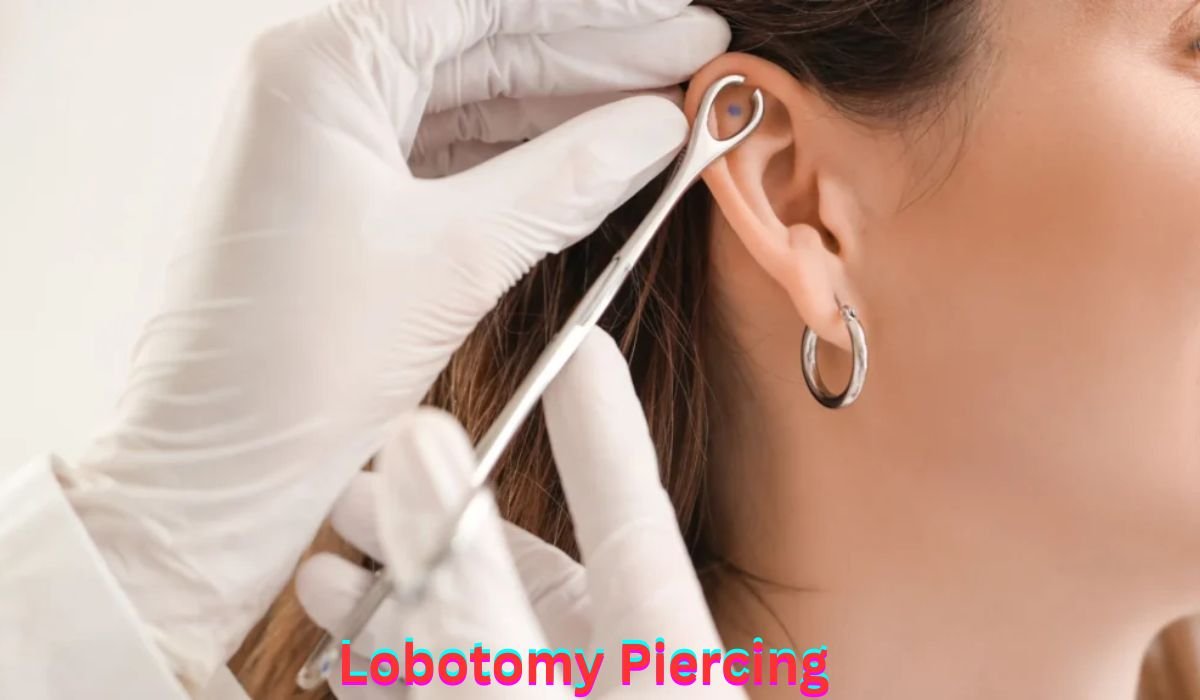
Body art has always been a bold form of human expression, from ancient tribal markings to today’s extreme body modification trends. Among these, the lobotomy piercing stands out as one of the most talked-about and misunderstood piercings in modern culture, equal parts art and controversy.
What makes this piercing so fascinating is not just its striking appearance but the story behind its name. It challenges beauty norms, sparks conversations, and invites deeper reflection on self-expression, identity, and the ever-evolving world of alternative aesthetics in contemporary piercing culture.
What Is a Lobotomy Piercing? Body Modifications A Deep Dive

Despite its alarming name, a lobotomy piercing is a bold surface piercing or transdermal piercing placed along the temporal region of the upper ear nowhere near the brain. It creates a dramatic anatomical illusion that turns heads wherever you go.
This aesthetic body modification sits at the boundary where ear anatomy meets the skull, giving it an almost futuristic appearance. It belongs to a growing family of extreme body mods that prioritize visual impact piercing and avant-garde aesthetics over conventional style choices.
Key facts at a glance:
- ???? Located near the upper helix and temple area
- ???? Uses straight barbells or floating illusion jewelry
- ???? Does NOT touch the skull or brain
- ???? Performed by a professional piercer with deep anatomical knowledge
- ⏳ Healing takes 6–12 months with dedicated piercing aftercare
| Feature | Detail |
| Piercing Type | Surface / Transdermal |
| Location | Temple cartilage / Upper ear |
| Jewelry Style | Titanium barbell, floating bar |
| Pain Level | Moderate to High |
| Healing Time | 6–12 months |
Why Is “Lobotomy” Called That?

The name comes from psychiatric history, specifically the infamous transorbital lobotomy, a brutal neurosurgery that severed connections in the prefrontal cortex as a mental illness treatment in the mid-20th century.
The name is pure shock value aesthetics, a dramatic nod to medical history controversy. The piercing mimics the visual angle of old lobotomy tools near the frontal lobe area, making it a statement piece rooted in mental health symbolism and dark historical awareness.
Why the name sticks:
- ???? References the visual angle of old surgical tools
- ???? Sparks immediate conversation and curiosity
- ???? Connects body autonomy with psychiatric history
- ???? Adds layers of meaning to artistic self-expression
How Does a Lobotomy Piercing Work?
This piercing passes horizontally through the temple cartilage near the upper helix, creating a stunning floating effect. It relies on expert knowledge of cartilage anatomy and cranial anatomy to sit correctly along the skull plane alignment.
Unlike a basic ear piercing, this one uses the principles of surface work piercing to create an anatomical illusion. The floating bar illusion makes jewelry appear to hover against the skin, a look that feels more science fiction than reality.
How it differs from regular piercings:
| Feature | Standard Ear Piercing | Lobotomy Piercing |
| Placement | Earlobe or helix edge | Temple cartilage region |
| Depth | Shallow | Deep surface/transdermal |
| Visual Effect | Simple | Floating illusion |
| Skill Required | Basic | Advanced/specialized |
| Healing Time | 6–8 weeks | 6–12 months |
- ???? Passes through temple cartilage, not just the outer edge
- ???? Creates a floating illusion jewelry effect
- ???? Requires precise skull plane alignment
- ????️ Demands hypoallergenic jewelry for safe healing
Lobotomy Piercing: Why People Choose It
People drawn to piercing subculture choose this for its unapologetic rebellious fashion appeal. It sits at the intersection of futuristic piercing trends and deep personal storytelling, a rare combination in the world of piercing trends and alternative fashion.
Beyond looks, it represents body autonomy, a reclaiming of identity, and a tribute to resilience. Many wearers connect it to themes of transformation symbolism turning something historically painful into something beautiful, defiant, and empowering through artistic self-expression.
Top reasons people get it:
- ✨ Edgy elegance that photographs beautifully
- ???? Sparks conversations about mental health symbolism
- ???? Membership in a niche body modification enthusiasts community
- ???? A bold challenge to conventional beauty standards
- ???? Pure self-expression and identity declaration
A Description of How the Procedure Is Performed
A skilled professional piercer begins with a thorough piercing consultation, assessing your ear structure and ear anatomy before touching any tools. Not every person’s temple area is suitable and a great piercer will tell you honestly.
The process involves careful piercing placement markings, full piercing sterilization, and the use of sterile hollow needles or dermal punches to create the channel. Jewelry alignment is everything here one millimeter off and the effect is ruined.
Step-by-step process:
| Step | Action |
| 1 | Consultation & ear structure assessment |
| 2 | Full piercing sterilization of tools and skin |
| 3 | Precise marking for piercing placement |
| 4 | Channel creation using sterile hollow needles |
| 5 | Insertion of titanium jewelry or barbell |
| 6 | Aftercare instructions provided |
- ???? Full piercing hygiene protocols followed
- ???? Entry and exit points marked for jewelry alignment
- ???? Dermal punches used in some placements
- ⚠️ Only performed by experienced body mod artists
There’s More to Jewelry Choices Than Aesthetics
Jewelry for a lobotomy piercing isn’t just decorative, it’s medical-grade functional. Titanium rods, straight barbells, and floating illusion jewelry are the most popular options, each chosen for both visual and biological compatibility during the healing process.
Material matters enormously. Implant-grade steel and titanium jewelry are the gold standards because they’re hypoallergenic jewelry options that reduce infection risks and support cartilage healing. Never compromise on material your body will thank you during the long healing timeline.
Jewelry comparison table:
| Jewelry Type | Material | Best For | Healing Support |
| Straight Barbell | Titanium | Initial healing | Excellent |
| Floating Bar | Implant-grade steel | Visual effect | Very Good |
| Titanium Rod | Titanium | Long-term wear | Excellent |
| Surface Bar | Titanium | Flat placement | Good |
- ???? Titanium jewelry is the top recommendation
- ❌ Avoid nickel or cheap metals high infection risks
- ???? Floating bar illusion creates the most dramatic look
- ???? Implant-grade steel works well for sensitive skin types
Modern Interpretations of Cultural Symbolism
Though it lacks ancient tribal roots like tribal tattoos or modern microderms, the lobotomy piercing carries rich cultural symbolism. It’s a reappropriation of psychiatric history, turning a symbol of medical trauma into one of personal power and body autonomy.
For many in the piercing community, it’s a statement against societal norms, a literal and metaphorical piercing of convention. It bridges alternative aesthetics, mental health symbolism, and rebellious fashion into one unforgettable piece of living, breathing body modification art.
What it symbolizes:
- ????️ Reclaiming power over psychiatric history
- ???? Celebrating body autonomy and personal freedom
- ???? Embracing conventional aesthetics and breaking them
- ???? A journey of transformation symbolism and reinvention
- ???? Defiance of outdated beauty standards and norms
Does It Work for Everyone?
Not everyone is a candidate for this anatomical piercing. A piercing consultation is essential to ear structure, skin type, lifestyle, and commitment to aftercare all play a role. Professional body modification experts may turn clients away if the placement isn’t anatomically viable.
Practical lifestyle factors also matter significantly. Side sleeping causes side sleeping issues that disrupt healing. Regular helmet pressure, glasses irritation, and headphones pressure near the site can cause migration and rejection making this piercing truly a lifestyle commitment, not just a fashion statement.
Who may NOT be a good candidate:
- ???? Heavy side-sleepers prone to side sleeping issues
- ???? People regularly experiencing helmet pressure on the area
- ???? Those with glasses irritation near the temple region
- ???? Individuals with keloid-prone skin at risk of hypertrophic scarring
- ???? People unable to commit to long piercing aftercare routines
Read Also This: Geekzilla.Tech Honor Magic 5 Pro The Ultimate Flagship Experience Redefined
A Comprehensive Guide to Aftercare
Piercing aftercare for a lobotomy piercing is non-negotiable and more demanding than most. Clean twice daily using saline solution or sterile water, always with clean hands. Avoid touching unnecessarily piercing hygiene is your best defense against complications.
Watch closely for warning signs: swelling and redness, pus and warmth, or unexpected scar formation beyond the initial healing window. Healing complications like migration and rejection, nerve irritation, or keloids can arise if aftercare is rushed or ignored during the cartilage healing period.
Complete aftercare checklist:
| Aftercare Task | Frequency | Purpose |
| Saline solution rinse | Twice daily | Prevent infection |
| Avoid touching | Always | Reduce contamination |
| No side sleeping issues | Nightly | Prevent migration |
| Check for swelling and redness | Daily | Early infection detection |
| Avoid headphones pressure | During healing | Prevent irritation |
| Professional piercer check-in | Monthly | Monitor healing progress |
Key aftercare tips:
- ???? Use only sterile water or saline solution nothing else
- ???? Avoid helmet pressure, tight hats, or anything near the site
- ????️ Monitor for pus and warmth early signs of infection
- ???? Never rush the healing timeline patience prevents scar formation
- ???? Full healing process takes 6–12 months minimum
Frequently Asked Questions
What does this unusual forehead piercing mean?
People choose Lobotomy Piercing for bold and unique body modification styles. It became popular through alternative fashion and social media trends.
Is this piercing risky for health?
Doctors warn that Lobotomy Piercing may cause infections without proper care. Safe cleaning habits help reduce healing and skin complications.
Why is this body trend becoming famous?
Many users discuss Lobotomy Piercing because of its shocking visual appearance. Online videos increased interest in rare piercing styles worldwide.
Does this piercing cause strong pain?
Most people say Lobotomy Piercing feels more painful than common piercings. Pain levels depend on skin sensitivity and placement area.
How much time does healing require?
Healing for Lobotomy Piercing may take several weeks with daily cleaning. Good aftercare helps avoid swelling and irritation problems.
Can beginners try this piercing safely?
Experts recommend trained artists for Lobotomy Piercing because it needs experience. Researching professional studios improves safety before getting pierced.
Which jewelry is best for this style?
Titanium pieces work well for Lobotomy Piercing because they are lightweight. High-quality jewelry supports better comfort during the healing process.
Conclusion
The lobotomy piercing is one of the most daring, misunderstood, and visually stunning forms of body modification available today. Far from dangerous, it’s a carefully crafted act of artistic self-expression that merges anatomy, history, and avant-garde aesthetics into a single, powerful statement worn on the body.
Whether you’re drawn to its edgy elegance, its mental health symbolism, or simply its jaw-dropping appearance, one thing is certain: this piercing demands respect. Choose a skilled professional piercer, commit to your piercing aftercare, and wear your transformation with the confidence and pride it truly deserves.


