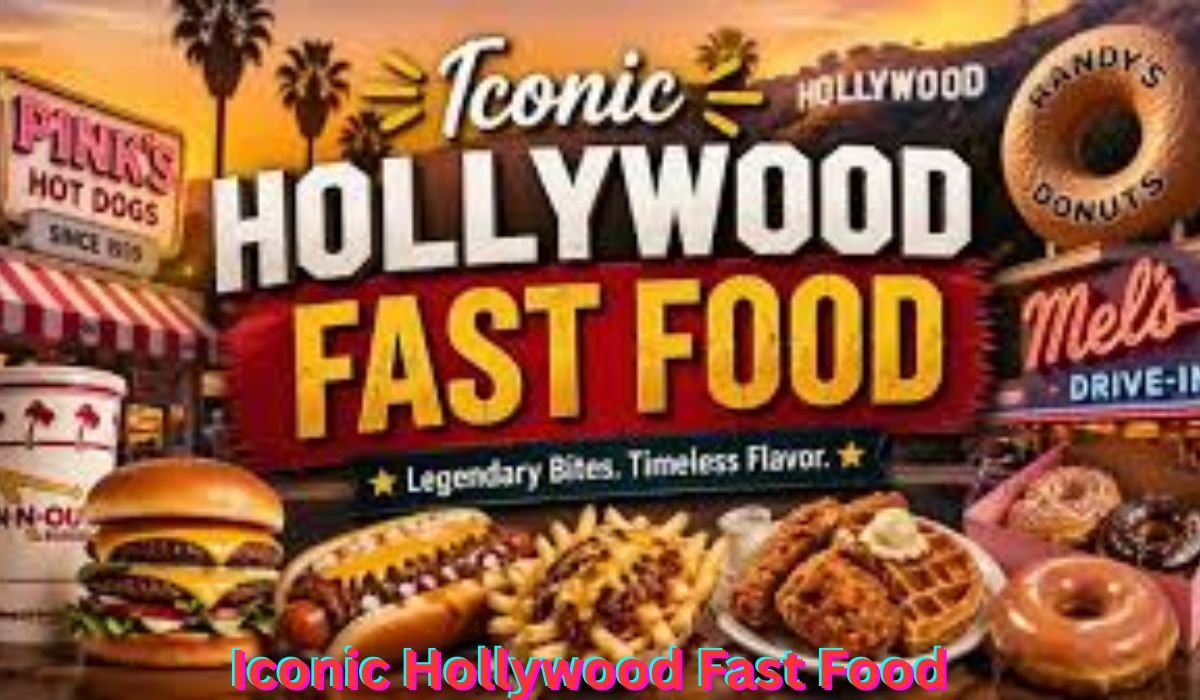
Hollywood has always been more than glamour and glittering red carpets. Beneath the spotlight lives a rich, delicious tradition that feeds the soul of the film industry the world of Hollywood fast food. These bites have shaped movie culture in ways nobody expected.
From buzzing film studios to packed sidewalks after movie premieres, food has always played a starring role. Actors, directors, and production crews didn’t just make blockbuster films, they grabbed burgers, fries, and milkshakes that became part of the story.
The Birth of Hollywood’s Fast Food Culture

Los Angeles was already experimenting with quick-service dining long before the fast-food industry went global. The booming entertainment industry created a real hunger literally for fast, affordable meals that fit crazy schedules.
Studio workers, stunt performers, and producers needed fuel between scenes. A simple hamburger stand near a studio lot could become famous overnight. That’s exactly how cinema culture and fast food found each other and never let go.
Key reasons fast food took root early in Hollywood:
- Film schedules left little room for sit-down meals
- Studio workers needed affordable, fast options nearby
- Los Angeles car culture made drive-ins a natural fit
- Close proximity of eateries to major film studios
| Era | Fast Food Trend | Hollywood Connection |
| 1930s–1940s | Hot dog carts & burger stands | Studio lot lunch staples |
| 1950s–1960s | Drive-in boom | Celebrity sighting hotspots |
| 1970s–1980s | Chain restaurant growth | Crew catering & late-night stops |
| 1990s–present | Fast casual & gourmet burgers | Social media & viral moments |
Why Fast Food Became a Hollywood Staple

The entertainment industry moves at a relentless pace. Long shoots, tight deadlines, and massive production crews mean nobody has time for a three-course dinner. Fast-food restaurants filled that gap perfectly and permanently.
Casual dining gave celebrities and crews a place to breathe. No dress codes, no fuss, just good food and real conversations. That simplicity became part of Hollywood food culture in the most authentic way possible.
Why fast food fit Hollywood perfectly:
- Quick turnaround between scenes on tight film schedules
- Affordable meals for hundreds of production crews
- Relaxed atmosphere where actors could unwind naturally
- Deeply embedded in American fast food identity shown on screen
The Restaurants That Became Legends
Certain spots in Los Angeles crossed the line from eatery to landmark. These places earned their place in Hollywood history not just through great food, but through decades of celebrity sightings, pop culture moments, and pure authenticity.
In-N-Out Burger, Pink’s Hot Dogs, and Fatburger aren’t just restaurants, they’re institutions. Each one carries stories, memories, and a reputation that no marketing budget could ever buy.
In-N-Out Burger Founded in 1948, In-N-Out Burger became the gold standard of California fast food. The Animal Style burger, fresh never-frozen beef, and hand-cut fries made it a cult favorite among actors and tourists alike.
Since 1939 on La Brea Avenue, Pink’s Hot Dogs has served up legendary chili dogs and creative pastrami toppings. Its walls are a living museum of Hollywood history, covered in celebrity photos that span generations.
Opened in 1952, Fatburger won hearts with its customizable burgers and diner-style atmosphere. Celebrity endorsements helped spread its fame far beyond Los Angeles, cementing it as a true entertainment landmark.
| Restaurant | Founded | Signature Item | Famous For |
| In-N-Out Burger | 1948 | Animal Style Burger | Secret menu & fresh ingredients |
| Pink’s Hot Dogs | 1939 | Chili Dog | Celebrity wall & La Brea Avenue location |
| Fatburger | 1952 | Customizable Burger | Diner-style & celebrity visits |
| Classic Drive-Ins | 1940s–50s | Varied | Carhop service & neon-lit nostalgia |
Hollywood Fast Food in Famous Movies
Movie storytelling has always leaned on relatable settings, and nothing feels more relatable than a fast-food restaurant. Filming locations like burger joints appear in countless scenes because they ground big stories in everyday American fast food culture.
A shared plate of fries or a milkshakes moment between characters speaks volumes without a single dramatic line. Visual storytelling through food creates emotional shortcuts that audiences instantly feel and remember.
Why filmmakers love fast-food settings:
- Instantly recognizable environments for audiences worldwide
- Perfect backdrop for casual, natural dialogue scenes
- Strong cultural symbolism tied to American life
- Budget-friendly filming locations with built-in character
The Role of Drive-Ins in Hollywood History
Drive-ins defined mid-century Hollywood like nothing else. Neon signs glowed across packed parking lots, carhop service delivered food to classic cars, and the whole scene felt straight out of a dream because it basically was.
These spots weren’t just restaurants; they were stages. Vintage architecture, outdoor dining, and a buzzing social energy made them natural filming locations and genuine hubs of Hollywood nightlife culture that still inspire nostalgia today.
Classic drive-in features that defined the era:
- Glowing neon signs visible from blocks away
- Carhop service delivering food directly to vehicles
- Outdoor dining atmosphere perfect for warm California nights
- Vintage architecture that became iconic in pop culture
| Drive-In Feature | Cultural Impact |
| Neon-lit signage | Became symbols of American nostalgia |
| Carhop service | Represented freedom & car culture |
| Outdoor atmosphere | Created community gathering spaces |
| Vintage design | Inspired countless film set designs |
The Influence of Celebrities on Fast Food Popularity
One celebrity sighting at a burger joint can change everything. When a famous actor is spotted enjoying a simple meal, fans everywhere want to experience the same thing. That’s the quiet power celebrities hold over fast-food culture.
Social media trends have made this effect even stronger. A single photo of a star eating at a classic hot dog stand or classic burger stand can go viral moments later, sending crowds flooding to the door.
How celebrities shape fast food popularity:
- Fans seek out celebrity hangouts for authentic experiences
- Media coverage turns casual visits into major entertainment landmarks
- Viral moments on social platforms spark instant interest
- Celebrity endorsements give restaurants long-lasting credibility
Tourism and Hollywood Food Landmarks
Millions of tourists pour into Los Angeles every year chasing movie culture tourism. Beyond the Hollywood Walk of Fame and studio tours, smart visitors know that the real flavor of the city lives in its legendary food spots.
Biting into a chili dog on La Brea Avenue or ordering an Animal Style burger isn’t just eating, it’s participating in Hollywood history. These authentic dining experiences connect visitors to the entertainment legacy they came to find.
Top reasons tourists seek Hollywood food spots:
- Experience places featured in beloved blockbuster films
- Visit confirmed celebrity hangouts and classic burger stands
- Photograph iconic neon signs and vintage architecture
- Sample historic menu items with real Hollywood history behind them
The Evolution of Fast Food in Modern Hollywood
Hollywood fast food hasn’t stayed frozen in time; it’s evolved alongside changing tastes and values. Plant-based burgers now sit proudly on menus next to classic American diner staples, and gourmet fast casual spots have raised the bar for quality.
Fast-casual restaurants blend speed with chef-quality ingredients, attracting a new generation of film industry workers and food lovers. Yet the spirit of the original casual dining tradition, quick, bold, and unpretentious remains very much alive.
Modern trends reshaping Hollywood fast food:
- Plant-based burgers meeting health-conscious production crews
- Gourmet fast casual blending quality with speed
- Secret menu culture thriving across new platforms
- Heritage burger chains modernizing while honoring Hollywood traditions
The Cultural Symbolism of Burgers, Fries, and Milkshakes
There’s something deeply emotional about burgers, fries, and milkshakes in the context of movie culture. These aren’t just foods, they’re symbols of comfort, connection, and the kind of simple joy that American fast food has always represented.
In film after film, characters bond over these meals. The cultural symbolism is powerful: sharing fries means sharing a moment. That’s why Hollywood food culture keeps returning to these classics as emotional anchors in movie storytelling.
What these foods symbolize in film:
- Burgers everyday life, reliability, and American identity
- Fries shared moments between characters building connection
- Milkshakes nostalgia, romance, and simpler times
- All three together the ultimate comfort of classic American diner culture
Late-Night Hollywood Food Traditions
When award shows wrap and camera crews finally call it a night, Hollywood nightlife heads somewhere casual and real. Late-night dining at a beloved fast-food restaurant is as much a Hollywood tradition as any formal after-party.
There’s something genuinely magical about seeing glamorous stars sitting in a booth at a casual eatery, enjoying the same American fast food as everyone else. That contrast glam meets humble is pure, authentic California culture at its finest.
Late-night Hollywood food habits:
- Actors and crew heading to casual eateries after long shoots
- Neon-lit drive-ins staying open for Hollywood nightlife crowds
- Tourists spotting celebrities at celebrity hangouts after movie premieres
- A relaxed mix of musicians, film pros, and fans sharing space
Read Also This: TGArchirvetech Gaming: The Future of Gaming World in 2026 and Beyond
Why These Restaurants Continue to Matter

Hollywood landmarks don’t survive decades by accident. The classic burger stands, hot dog stands, and neon-lit drive-ins that have lasted generations did so by offering something money can’t manufacture: genuine cultural nostalgia wrapped in great food.
These entertainment landmarks carry real Hollywood history in every bite. They represent tradition, authenticity, and a living connection to the entertainment legacy that built Los Angeles into the creative capital of the world.
Reasons these restaurants endure:
- Unchanged recipes that honor Hollywood traditions honestly
- Deep cultural nostalgia that connects generations of fans
- Continuous celebrity sightings keeping them in the spotlight
- Truly authentic dining experiences that feel real, not manufactured
| Factor | Why It Matters |
| Tradition | Recipes unchanged for generations build loyalty |
| Celebrity ties | Famous visitors keep restaurants culturally relevant |
| Nostalgia | Emotional connections outlast trends every time |
| Authenticity | Genuine character wins over commercial imitation |
Frequently Asked Questions
What Made Classic Movie Meals So Famous?
Many fans still love Iconic Hollywood Fast Food because movies made burgers, fries, and shakes feel exciting and unforgettable.
Which Fast Food Chains Became Movie Legends?
People remember Iconic Hollywood Fast Food from famous scenes featuring diners, drive-ins, and late-night burger restaurants across Hollywood films.
Why Do Movie Fans Love Retro Diners?
Old-style cafes made Iconic Hollywood Fast Food feel stylish, fun, and full of celebrity culture during classic movie years.
What Foods Were Popular in Hollywood Movies?
Burgers, hot dogs, fries, and milkshakes shaped Iconic Hollywood Fast Food in many blockbuster films and celebrity hangouts.
How Did Films Influence Fast Food Trends?
Many restaurants copied Iconic Hollywood Fast Food ideas after movies made certain meals look trendy, cool, and delicious worldwide.
Why Are Vintage Burger Spots Still Popular?
Fans visit places linked with Iconic Hollywood Fast Food because they enjoy nostalgic meals connected to famous movie history and stars.
What Makes Hollywood Food Culture Unique?
The mix of cinema, celebrities, and diners helped Iconic Hollywood Fast Food become a lasting symbol of entertainment and American culture.
Conclusion
Hollywood fast food is more than a meal, it’s a living piece of movie culture that has nourished the film industry for nearly a century. From the original drive-ins of mid-century Hollywood to today’s gourmet fast casual spots, these places carry stories that no studio could script better.
For locals, tourists, and dreamers alike, grabbing a burger under the neon signs of Los Angeles means joining something bigger. It means tasting the same California spirit that fueled legends, shaped pop culture, and turned a simple hamburger stand into an enduring piece of entertainment legacy.


