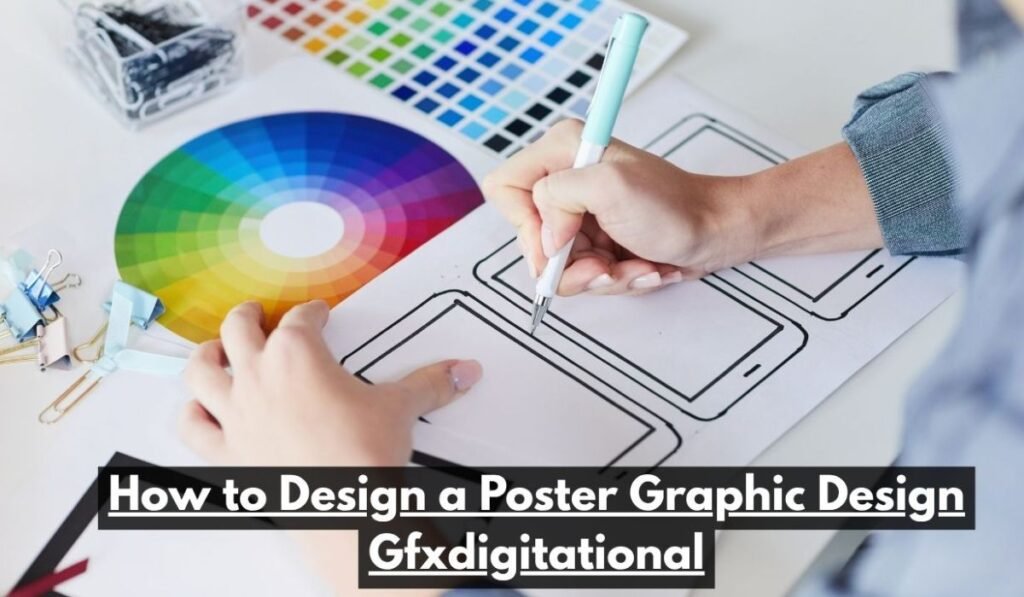
Poster design is one of the most exciting areas of graphic design. It blends visual communication, creativity, and strategy into one powerful image. Whether you are a beginner or a working creator, learning how to design a poster gives you a skill that never goes out of style.
Gfxdigitational is where design thinking meets digital execution. When you understand the principles behind a strong poster layout, everything clicks. This guide walks you through each step clearly, like a friend who has already made every mistake so you do not have to.
What Makes a Great Poster Design?
A great poster is not just pretty. It communicates fast. Visual storytelling happens in seconds, and a strong poster uses design structure to guide the eye naturally from one element to the next without confusion.
- It grabs attention instantly
- It delivers one clear message
- It tells the viewer what to do next
- It feels intentional, not accidental
| Quality | Weak Poster | Strong Poster |
| Message | Cluttered, confusing | Clear and focused |
| Visual Impact | Low contrast | Bold and sharp |
| Readability | Too much text | Scannable in seconds |
| Action | No direction | Clear CTA |
Key Elements of a Successful Poster
Every effective professional poster shares the same building blocks. These are the graphic elements that turn a blank canvas into a communication design tool that actually works in real life.
- Headline Design the first thing eyes land on
- High-Resolution Images sharp visuals that build trust
- Typography fonts that are readable, not just decorative
- Call to Action (CTA) the instruction that drives results
| Element | Role | Example |
| Headline | Grab attention | “Limited Seats Available” |
| Visual | Create emotion | Bold photo or illustration |
| Details | Inform clearly | Date, venue, time |
| CTA | Drive action | “Scan to Register” |
Define Your Purpose and Audience
Before opening any design software, ask yourself who this poster is for. A promotional poster for a youth event looks completely different from an advertising poster for a corporate seminar.
- Who is your target viewer?
- What single action should they take?
- Where will the poster appear on the street, screen, or shop?
- What emotion should it trigger?
Skipping this step creates confusion later. Design strategy starts with clarity of purpose, not with colors or fonts. Think first. Design with intention.
Choose the Right Poster Size
Size affects how your poster composition feels and functions. A street poster seen from ten feet away needs massive text. A digital poster on a phone screen needs tight, clean spacing.
- Small format: indoor notice boards, café tables
- Medium format: shop window poster, retail displays
- Large format: event boards, street-facing walls
- Digital format: social media graphics, email banners
| Format | Best Use | Key Requirement |
| Small (A4/A3) | Indoor, close-up | Fine detail works |
| Large (A1/A0) | Outdoor, distance | Big text, strong contrast |
| Digital Poster | Screen, social | RGB color, screen resolution |
| Print Poster | Physical display | CMYK, 300 DPI minimum |
Pick Your Design Tool
Your tool should match your skill level. Beginner graphic design tools like Canva and other drag-and-drop editors make it easy to start. As you grow, platforms like Figma and online design apps offer more control.
- Canva beginner-friendly, fast templates
- Figma great for creative layout and collaboration
- Adobe Illustrator professional vector design
- Adobe Photoshop image editing and poster mockup creation
The tool does not make the designer. The idea does. Start with whatever gets you creating, and upgrade your skills over time through practice.
Build a Strong Layout Structure
Layout design is the backbone of every good poster. A clear design flow tells the viewer’s eyes exactly where to go, without them having to think. This is the heart of poster composition.
- Top zone: bold headline design the attention grabber
- Middle zone: key visuals and supporting details
- Bottom zone: call to action and contact information
- Margins: keep them clean for white space and breathing room
Design grid systems help you align every element professionally. Never place things randomly. Every placement should serve the layout structure and support the main message clearly.
Use Colors with Purpose
Color theory is not optional in modern graphic design, it is essential. Colors create emotion before a single word is read. Your color contrast choices directly affect viewer engagement and attention.
- Red urgency, energy, bold statements
- Blue trust, calm, professional tone
- Yellow optimism, attention-grabbing warmth
- Green health, growth, natural balance
| Color Mood | Best Used For | Avoid When |
| Red | Event poster, sales | Medical or calm themes |
| Blue | Poster branding, corporate | High-energy events |
| Yellow | Promotional poster | Small text on white |
| Black/White | Minimal design | Warm, cheerful events |
Limit yourself to two or three main colors. More than that creates design aesthetics that feel chaotic instead of confident.
Choose Fonts That Are Easy to Read
Poster typography can build trust or destroy it instantly. The wrong font makes people skip your message. The right font makes poster readability effortless and natural.
- Use sans-serif fonts for bold, modern headlines
- Use serif fonts for detailed informational text
- Practice font pairing one headline font, one body font
- Never use more than two font styles on one poster
Bold typography works well for visual attention because it creates instant contrast. Modern typography trends favor clean, strong letterforms over decorative scripts. When in doubt, choose clarity over personality.
Add High-Quality Images
High-resolution images are non-negotiable in professional poster design. A blurry photo destroys credibility in an instant, no matter how good your layout or typography is.
- Always use images at 300 DPI for print design
- Use 72–150 DPI for digital design and screens
- Choose images that match your poster’s emotional tone
- Avoid generic stock photos that feel disconnected
Poster illustration and custom visuals can set your work apart. Strong poster artwork tells a story without words. Every image you choose should earn its place and directly support the poster messaging.
Create Visual Hierarchy
Visual hierarchy is how you control attention. It tells the viewer what to look at first, second, and third. Without it, everything fights for attention and nothing wins.
- Make your headline the largest element on the page
- Use color contrast to separate important from secondary content
- Let white space breathe between sections
- Use alignment to create order and composition balance
Information hierarchy is not just a design trick it is design psychology in action. When the eye has a clear path to follow, the viewer absorbs your message faster and remembers it longer. Guide, do not confuse.
Add a Clear Call to Action (CTA)
A call to action (CTA) is what turns a poster into a tool. Without one, viewers admire the design and walk away doing nothing. Your CTA needs to be impossible to miss.
- Keep it short three to five words maximum
- Place it where the eye lands last, usually the bottom
- Use QR code design to make action effortless
- Make sure it contrasts strongly against the background
Examples of strong CTAs:
- “Buy Tickets Now”
- “Scan to Join”
- “Visit Our Store Today”
- “Register Before Friday”
Quick Design Checklist
Before you call any design finished, run through this fast checklist. It saves you from publishing something that looks off or incomplete in the real world.
- Is the main message clear in under three seconds?
- Is the headline design the dominant visual element?
- Does the CTA stand out clearly?
- Are colors balanced with strong color contrast?
- Is white space used to keep things clean?
- Are fonts limited to two styles maximum?
- Are all images high-resolution and relevant?
If you can answer yes to every point, your creative poster design is ready to go.
Design for Real-World Viewing Conditions
A poster template looks perfect on your screen, but the real world is noisy, bright, and fast. Poster marketing only works when the design survives real viewing conditions.
- Design for motion people walk and scroll quickly
- Test your street poster at a distance before printing
- Check if your digital poster reads well on a small phone screen
- Simulate real lighting conditions when possible
Think about someone holding a coffee in one hand while walking past your poster. If they can read it and understand it in two seconds, your poster advertising is doing its job. Design for speed, not perfection.
Use Contrast to Control Attention
Contrast design is the tool that separates professional posters from amateur ones. Without contrast, every element blends together and the viewer loses interest immediately.
- Use size contrast big headline versus small body text
- Use high contrast colors dark text on light background
- Use weight contrast bold typography versus thin supporting text
- Use spacing contrast tight details versus open white space
Visual focus is impossible without contrast. One element must be the loudest voice. Everything else supports it quietly. This is a core design principle that applies to every poster, regardless of style or industry.
Keep the Design Simple and Focused
Minimal design is not laziness, it is discipline. The most powerful creative direction in poster design is knowing what to remove. Every unnecessary element weakens the message.
- One main idea per poster no exceptions
- One dominant visual supported by clean graphic elements
- One strong CTA placed where the eye naturally finishes
- Remove anything that does not support the core message
Clean composition always wins. A clean layout with strong visual balance communicates confidence and professionalism. When you stop decorating and start designing with purpose, your work immediately levels up.
Common Mistakes Beginners Make
Beginner graphic design mistakes are common, and knowing them saves you hours of frustration. Most of these mistakes come from trying to say too much instead of trusting simplicity.
- Too much text posters are not essays
- Weak visual hierarchy everything looks equally important
- Poor font pairing fancy fonts that kill poster readability
- Low-quality images that destroy the professional design feel
- No clear CTA viewers have no idea what to do next
- Too many colors that break design balance
- Ignoring white space, resulting in a cluttered feel
Every designer makes these mistakes early on. The faster you recognize them, the faster your creative visuals improve.
Design Psychology Behind Posters
Design psychology explains why certain posters stop people in their tracks. Understanding how the brain processes visuals gives you a serious edge in visual branding and poster campaign work.
- People look at the largest element first always
- High contrast colors pull the eye before anything else
- Human faces create instant emotional connection
- Simple words reduce mental effort and increase recall
Viewer psychology tells us that a poster works best when it feels effortless to understand. If someone has to figure it out, the design is already lost. Make the thinking invisible and the message obvious through strong poster composition.
Real-Life Example Flow
Here is how a music event poster would come together using all these principles. This is creative communication made practical and clear.
- Headline: Large, bold artist name at the top
- Visual: Poster illustration or dramatic artist photo
- Details: Date, venue, and time in readable sans-serif fonts
- CTA: “Get Tickets” button with QR code design
- Color: High energy palette matching the music genre
- Layout: Clean top-to-bottom design flow
This is how event poster design becomes a poster campaign that drives real results. Nothing is random. Every element serves the message and moves the viewer toward a clear action.
Preparing for Print vs Digital Use
Print design and digital design follow different rules. A poster built only for one world often fails in the other. Smart graphic design always accounts for both.
- Print poster: 300 DPI, CMYK color mode, bleed margins included
- Digital poster: RGB color, optimized file size, mobile-friendly layout
- Social media graphics: Platform-specific dimensions matter
- Poster mockup: Always preview in both environments before finalizing
| Factor | Print Poster | Digital Poster |
| Resolution | 300 DPI minimum | 72–150 DPI |
| Color Mode | CMYK | RGB |
| File Format | PDF, TIFF | PNG, JPEG, GIF |
| Viewing Distance | Arms length to far | Screen close-up |
Final Review Before Publishing
The final review is where good design workflow separates professional results from rushed ones. Step away from your work for ten minutes, then return with fresh eyes.
- Does the poster messaging land in under three seconds?
- Is the design balance and visual balance correct?
- Does anything distract from the main idea?
- Is the CTA impossible to miss?
- Would you personally stop to read this poster?
Design consistency is what makes a finished poster feel polished. Check fonts, colors, spacing, and alignment one final time. A small error caught here saves embarrassment after publishing.
Read Also This: Connectivity HSSGamepad: How It Elevates Your Gaming Experience in 2026
Practical Poster Design Tips
These quick tips come from real design experience and make a noticeable difference in your graphic composition and overall output quality.
- Always design on a design grid for clean alignment
- Keep margins consistent for professional poster presentation
- Use bold typography only for the most important words
- Leave generous space around your CTA so it breathes
- Test your color contrast in greyscale to check readability
- Save multiple versions one for print design, one for digital design
- Study real poster artwork that works and ask yourself why
Design principles are timeless. Trends come and go, but clarity, contrast, and visual focus always perform. Build your foundation on principles first.
Poster Design Trends in Modern Graphic Design
Modern graphic design is moving fast. Design trends shift every year, but the best designers know how to adopt trends without sacrificing clarity and poster readability.
- Bold typography as the primary visual text as art
- Minimal layouts with dramatic white space use
- High contrast colors and neon-inspired palettes
- Mixed media design combining photography and illustration
- QR code design integrated as a design element, not an afterthought
- Poster branding tied tightly to overall visual branding systems
Modern poster trends reward designers who understand the foundation. A trendy poster that cannot communicate clearly is still a failure. Let trends inspire your creative direction, but let design principles lead every decision you make.
Frequently Asked Questions
What makes a design style look modern?
Modern visuals use clean layouts and bold colors. Graphic Design Gfxdigitational helps creators build fresh and simple designs fast.
Which tools are best for beginners?
Easy software with templates works best first. Graphic Design Gfxdigitational shares beginner tools and smart design tips daily.
How can someone improve poster design skills?
Practice spacing fonts and color balance every day. Graphic Design Gfxdigitational teaches poster ideas with simple creative methods.
Why do brands need creative visuals online?
Good graphics help brands get more attention quickly. Graphic Design Gfxdigitational supports strong branding with attractive visual content.
What are the latest trends in digital artwork?
Minimal styles and 3D graphics are trending now. Graphic Design Gfxdigitational covers modern artwork ideas for social media creators.
How do designers choose the right colors?
Designers match colors with brand mood and audience. Graphic Design Gfxdigitational explains color combinations in very easy ways.
Can beginners learn design without experience?
Yes beginners can learn through daily creative practice online. Graphic Design Gfxdigitational makes learning graphic design simple and beginner friendly.
Conclusion
Learning how to design a poster through Gfxdigitational principles is really about mastering visual communication. Every step from poster layout to color theory to typography exists to serve one goal: make the message land fast, clearly, and memorably. Simplicity is always the smartest strategy.
Great graphic design is not about decoration. It is about direction. When you approach every poster with a clear purpose, a thoughtful design structure, and respect for your viewer’s attention, the results speak for themselves. Keep practicing, keep simplifying, and let your creative work do the talking.


