
We live in a world where images travel faster than words. Every day, billions of pictures are uploaded, shared, and repurposed across the internet. Understanding image search techniques is no longer just a tech skill, it is a practical life skill that helps you find what you need, verify what you see, and protect what you create.
Whether you are a student, a business owner, a journalist, or simply someone who scrolls through social media, knowing how visual search works gives you a real edge. These techniques help you cut through noise, spot fake content, find high-quality visuals, and make smarter decisions all by using images more intelligently online.
What Are Image Search Techniques
Image search techniques are the smart methods people use to find, compare, and verify images on the internet. They go far beyond typing words into a search bar. Today’s tools use artificial intelligence (AI), computer vision, and pattern recognition to understand what is actually inside a picture, not just the label attached to it.
These techniques include uploading an image to find where it came from, using filters to narrow results by size or color, or letting image recognition systems identify objects and scenes automatically. They also rely on metadata analysis, alt text, image captions, and file name optimization to connect images to the right search results.
Key methods covered in image search techniques:
- Reverse image search upload an image to find its source
- Advanced image search filters sort by size, color, date, or license
- Visual similarity search find images that look alike
- Object detection identify what is inside a picture
- Optical character recognition (OCR) read text inside images
| Technique | Primary Use | Best Tool Type |
| Reverse image search | Verify source and origin | Google Images, TinEye |
| Advanced filters | Refine results by quality | Search engine settings |
| Visual similarity search | Find matching visuals | AI-powered platforms |
| OCR | Extract text from images | Dedicated OCR software |
How Image Search Has Changed Over Time

Early image search was basic and often frustrating. Search engines only read the text around an image, the alt text, image captions, and file name optimization to decide what a picture was about. If that text was missing or vague, the image was almost impossible to find.
Then came machine learning and computer vision, and everything changed. Systems began analyzing actual visual content shapes, colors, textures, and structures rather than relying solely on labels. Image indexing became smarter, image content analysis became more accurate, and search engines could finally understand a picture the way a human eye does.
How image search evolved over time:
- 1990s Basic text-label matching only
- 2000s Better image indexing and keyword tagging
- 2010s Machine learning improves visual analysis
- 2020s AI and computer vision power real-time recognition
| Era | Technology Used | Search Capability |
| Early internet | Text labels only | Very limited |
| 2000s | Metadata and keywords | Moderate |
| 2010s | Machine learning | Much stronger |
| 2020s | AI and computer vision | Near-human accuracy |
Understanding Reverse Image Search
Reverse image search flips the traditional process. Instead of typing words to find a picture, you use the picture itself to start the search. Upload an image or paste its URL, and the system uses image recognition systems and visual comparison tools to find matching or similar results across the web.
This technique relies on deep image content analysis and digital content analysis to identify visual patterns. It can reveal where an image first appeared, how many times it has been reused, whether it has been edited, and which websites currently host it. It is one of the most honest tools available for verifying digital content.
What reverse image search can uncover:
- The original source of an image
- Whether an image has been cropped or altered
- How many websites are using the same picture
- Hidden context behind a viral or misleading photo
Reverse image search is also valuable for image duplication detection and copyright detection, helping creators track unauthorized use of their work across the internet quickly and efficiently.
Why Reverse Image Search Matters in Real Life
Online images rarely come with full context. A photo can be cropped, recolored, mislabeled, or paired with a completely false story. Reverse image search acts like a digital detective, tracing where a picture really came from and how it has been used making it an essential fact-checking tool and journalism verification tool.
Businesses use it for brand monitoring and logo tracking spotting unauthorized use of their visual identity. Photographers rely on it for copyright detection. Online shoppers use it for e-commerce product search, comparing listings across sellers and identifying the true manufacturer behind a product image.
Real-life applications of reverse image search:
- Journalists use it for source validation during breaking news
- Researchers use it for research-based image search and academic verification
- Businesses use it for marketing analytics (visual) and social media image tracking
- Artists use it to catch content theft and protect creative rights
The Role of Advanced Image Search Filters
Advanced image search filters are the tools that turn a broad, messy pile of results into exactly what you need. Instead of scrolling endlessly, filters let you sort by image size, color, file type, date, and usage rights giving you control over image quality analysis and relevance in seconds.
Usage rights filters and licensing checks are especially important for bloggers, publishers, and marketers. They help identify images that can legally be reused without violating copyright. High-resolution image search filters are critical for designers who need sharp, print-ready visuals rather than blurry web thumbnails.
Most useful image search filters and what they do:
| Filter Type | What It Controls | Who Needs It Most |
| Size filter | Image dimensions and resolution | Designers, publishers |
| Color filter | Dominant color in results | Brand teams, creatives |
| Usage rights filter | Legal permission to reuse | Bloggers, marketers |
| Date filter | When the image was published | Journalists, researchers |
| Type filter | Photo, clip art, drawing, etc. | Students, educators |
- Usage rights filters protect you from accidental copyright violations
- High-resolution image search ensures quality for professional work
- Date filters help track how images spread over time
- Color filters help match visuals to brand guidelines instantly
Combining Reverse Search and Filters for Better Results
Using reverse image search alone gives you reach. Using advanced image search filters alone gives you precision. But combining both gives you a complete, powerful workflow that turns casual browsing into focused, strategic discovery and that is where image search techniques truly shine.
Imagine finding a product image online and using reverse search to locate all websites hosting it. Then apply image quality analysis filters to find the highest-resolution version, a usage rights filter to check if it is free to reuse, and a date filter to find the most recent listing. That is efficient, smart searching at its best.
Step-by-step combined search workflow:
- Upload or paste the image URL into a reverse search tool
- Review results to identify where the image appears
- Apply advanced image search filters to narrow results
- Use licensing checks to verify permission before using
- Cross-check results across multiple online image databases
This combination is especially powerful for e-commerce product search, brand monitoring, digital forensics (image-based), and any situation where accuracy and legality both matter.
Common Uses of Image Search Techniques
Image search techniques are used across nearly every field today. In digital marketing, teams use visual research tools and marketing analytics (visual) to study competitors, track campaigns, and identify stolen brand assets. In academia, students rely on academic visual references and image indexing to gather credible research materials.
Journalists depend on journalism verification tools and fact-checking tools to confirm whether photos shared during major events are genuine or recycled from past stories. Meanwhile, everyday users benefit from e-commerce product search features that help them identify products, compare prices, and find original manufacturers simply by uploading a photo.
Who uses image search and why:
- Journalists verify images with source validation and digital forensics (image-based)
- Marketers track assets using social media image tracking and logo tracking
- Students find academic visual references and credible diagrams
- Shoppers locate products through e-commerce product search
- Designers source inspiration using visual comparison tools
- Creators protect work with copyright detection and image duplication detection
Challenges and Limitations of Image Search
Even the best image recognition systems have their limits. Heavily edited images, tightly cropped image analysis, low-resolution uploads, or mirrored photos can confuse search algorithms and produce weak or irrelevant results. Image quality analysis tools work best with clear, unaltered visuals, and results can vary widely from one platform to another.
Another major challenge is context. Visual similarity search may return images that look nearly identical but belong to completely different stories. Search engine image retrieval is powerful but not perfect and users must apply critical thinking alongside these tools. Finding an image in results does not mean it is free to use; licensing checks and usage rights filters are still essential steps before publishing or sharing any visual content.
Common limitations to watch out for:
- Blurry or heavily cropped images reduce match accuracy
- Image metadata may be missing or stripped from shared files
- Visually similar results are not always contextually accurate
- No single online image database covers the entire web
- Face recognition tools raise privacy and ethical concerns
Read Also This: Upgrade Oxzep7 Python Like a Pro: Tips and Tricks for Smooth Transition
Best Practices for Smarter Image Searching
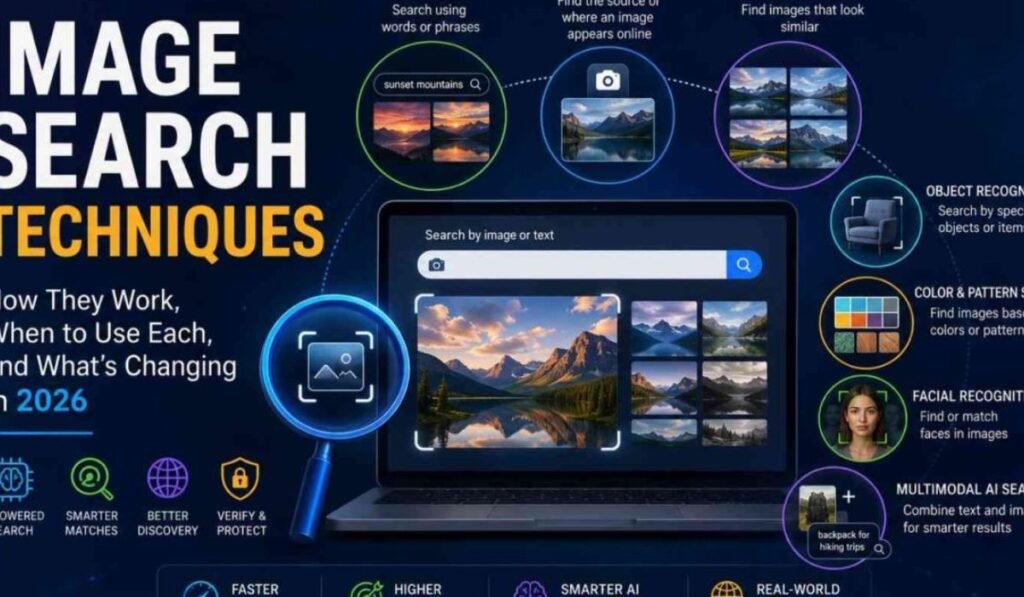
The smartest approach to image search techniques starts with a clear, high-quality image. A sharp, uncropped photo gives image recognition systems and visual comparison tools the best chance of finding accurate matches. If the first search returns weak results, try cropping to the main subject or using a different version of the image.
Always compare findings across multiple online image databases rather than trusting a single result especially for fact-checking tools or source validation in journalism or research. Apply advanced image search filters one step at a time to avoid over-filtering and missing useful results. Treat every image search like a small investigation: look at dates, check the source website, and verify the context before drawing any conclusions.
Smart habits for better image searching:
- Start with the clearest version of your image for stronger results
- Use metadata analysis to review image details before relying on it
- Check usage rights filters before sharing or publishing any image
- Combine reverse image search with date and size filters strategically
- Use digital content analysis to cross-check suspicious or viral images
- Trust multiple visual research tools, not just one platform alone
| Best Practice | Why It Matters |
| Use high-resolution images | Improves image recognition systems accuracy |
| Check usage rights | Avoids copyright violations |
| Cross-check platforms | Increases source validation reliability |
| Apply filters step-by-step | Prevents over-filtering and missed results |
Frequently Asked Questions
How do I find better visual results quickly?
Image Search Techniques help get fast accurate visual results using smart filters and keywords for better discovery today.
How can I verify image authenticity online?
Image Search Techniques allow reverse search and metadata checks to confirm real sources and detect fake images easily.
Where can I improve image search accuracy?
Image Search Techniques refine searches with specific keywords and filters to improve relevance and remove unwanted results quickly.
Which tools help in finding similar images?
Image Search Techniques use reverse image tools to find visually similar content across multiple platforms and databases online.
How do professionals refine image searches?
Image Search Techniques are used by experts to adjust keywords and filters for precise and high-quality results.
Why are advanced image searches important?
Image Search Techniques improve accuracy and save time by delivering more relevant and targeted visual information instantly.
What is the best way to filter images online?
Image Search Techniques help apply size, color, and usage filters to get exactly suitable images for any purpose.
Conclusion
Image search techniques have grown from simple keyword lookups into a sophisticated system powered by artificial intelligence (AI), computer vision, machine learning, and pattern recognition. They now serve as essential tools for verification, discovery, research, and protection giving every internet user the power to search smarter and trust more confidently what they find online.
As digital images continue to multiply across every platform, the ability to use reverse image search, apply advanced image search filters, perform image verification, and understand licensing checks becomes more valuable every day. These are not just technical skills, they are smart habits that protect your credibility, save your time, and keep you fully in control of how you create, share, and consume visual content in the modern world.